

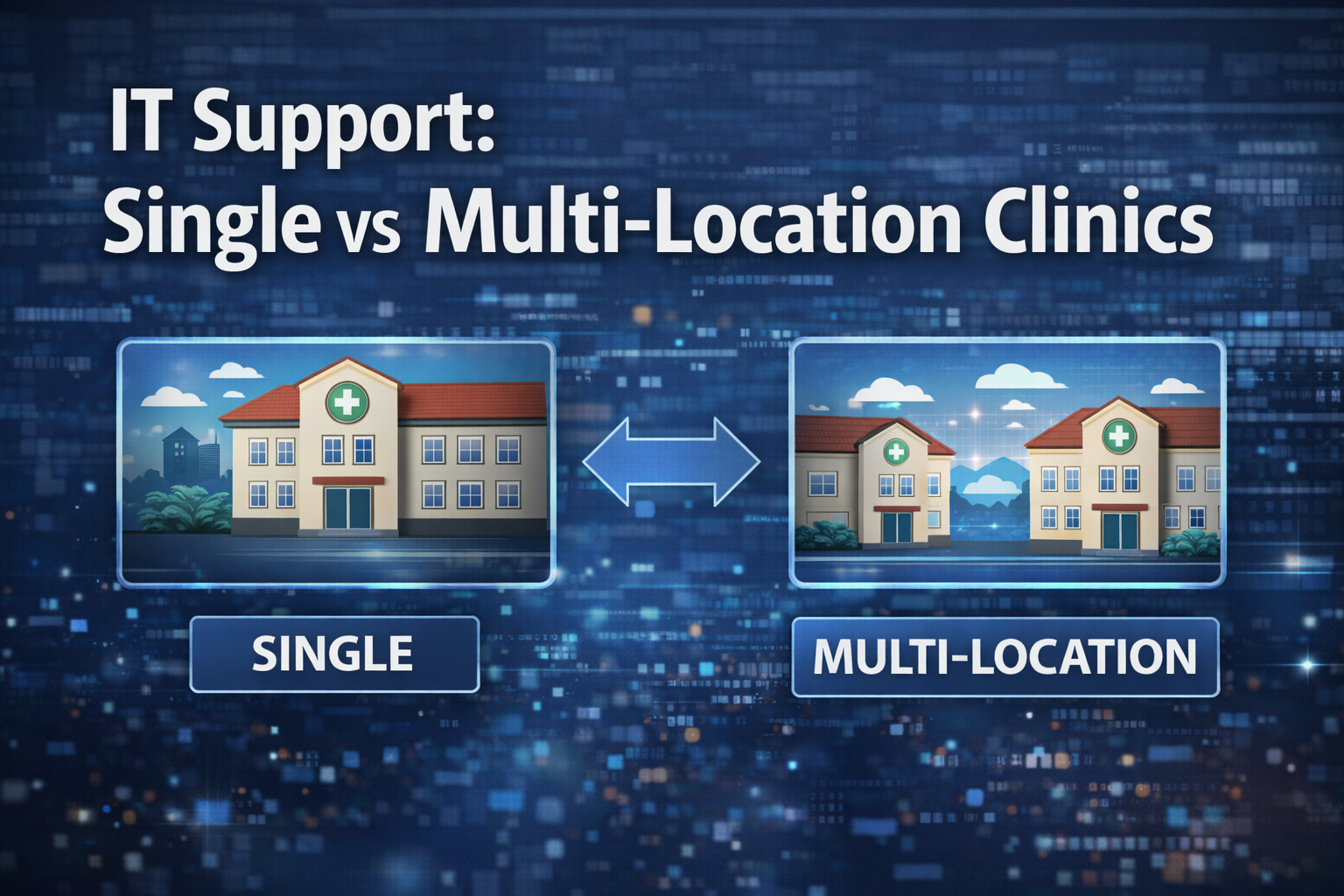
Multi-location clinics often make avoidable IT and security mistakes as they grow, increasing downtime, compliance exposure, and cybersecurity risk. Specialty and outpatient practices with 20–75 employees commonly outgrow basic IT setups but fail to implement centralized controls. These mistakes often surface during ransomware incidents, audits, or cyber insurance reviews — when the cost of correction is highest.
1. Treating Each Location as a Separate IT Environment
Operating locations independently leads to:
Inconsistent security controls
Poor visibility
Higher support costs
Increased breach risk
Multi-location clinics need centralized management and monitoring.
2. Relying on Basic IT Support Instead of Proactive Security
Many clinics still use:
Break/fix IT
Minimal antivirus
Reactive troubleshooting
This approach leaves gaps in detection, response, and compliance.
3. Ignoring Compliance Until There’s a Problem
Common warning signs:
No documented risk assessments
Outdated policies
No audit readiness
Compliance gaps often go unnoticed until triggered by an incident.
4. Underestimating Ransomware and Downtime Risk
Clinics often assume:
Backups are working
Insurance will cover losses
Attacks won’t happen to them
Ransomware regularly disproves these assumptions.
5. Not Assigning IT Strategy Ownership
Without strategic oversight:
IT decisions become reactive
Security investments are inconsistent
Growth creates unmanaged risk
Multi-location practices benefit from vCIO-level planning, not just support tickets.
Real-World Example (Anonymized)
A five-location specialty practice with 62 employees experienced repeated outages and rising IT costs due to decentralized systems and reactive support. After implementing centralized management, security monitoring, and strategic IT planning, downtime decreased, compliance improved, and leadership gained visibility across all locations.
Why Healthcare-Focused IT Strategy Matters
Multi-location clinics face:
Operational complexity
Regulatory requirements
High security risk
A cybersecurity-first MSP with healthcare expertise helps clinics scale safely while maintaining compliance and uptime.
Industry Resources
Healthcare IT & Cybersecurity Services
See how NorthStar protects healthcare organizations with HIPAA-compliant IT, cybersecurity, and 24/7 monitoring.
Learn More →About the author

Ken Satkunam, CISM
President & Founder, NorthStar Technology Group
Ken has spent over 25 years in IT leadership, serving in roles from technical support to CIO for organizations as large as 23,000 employees. He founded NorthStar Technology Group in 2000 to help regulated organizations build secure, compliant, and operationally resilient technology environments. Ken holds the Certified Information Security Manager (CISM) credential from ISACA and is the co-author of the Amazon best-seller "Cyber Attack Prevention." He has been quoted in industry publications including eWeek and DM News, and NorthStar has been recognized on the Inc. 5000 list in both 2024 and 2025.